

Bitcoin SV protocol has no block cap. Bigger blocks, more transactions… higher revenue!
What is Bitcoin Mining?
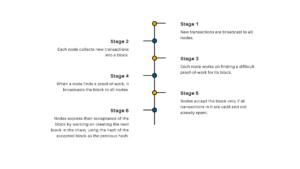
Bitcoin mining is the process where groups of computers compete with each other to order and validate transactions in exchange for earning payment in Bitcoin. These groups of computers are called nodes (synonymous with miners or transaction processors) and they should seek to put as many transactions in a block as they can.
Once they have verified, collated and ordered all of the transactions being exchanged around the bitcoin network, these nodes perform proof of work where they run a complicated computer algorithm in a process known as hashing.
These nodes compete for the right to extend the blockchain by using computing power on a hash algorithm, running it repeatedly to find a valid solution to a proof of work puzzle. Once a node solves the proof of work puzzle, it then propagates the resulting block that it constructed to as many of the other nodes on the network as fast as possible.
A node does not collect a reward until it both finds a solution to the hash algorithm for a block and also demonstrates to a majority of the other nodes that their block and solution are valid.
The block reward is the incentive for transaction processors to compete for the right to add blocks to the Bitcoin ledger; it compensates the processor who found the block with a number of Bitcoins equal to the current block subsidy and sum of fees from all transactions included in that block. The block subsidy is set to reduce over time in order to incentivize the scaling of the network where the best nodes who propagate transactions the fastest are able to remain profitable and grow the network.
This coinbase transaction is the first transaction in a block that pays the processor who found the block. The subsidy portion of the block is set by the Bitcoin protocol, which began as 50 Bitcoins in 2009, but halves approximately every 4 years. After the most recent “halving” event in 2020, the current block subsidy is 6.25 Bitcoins.
Nodes are incentivized to be honest. This enables them to enforce rules which includes not propagating bitcoin associated with proceeds of crime. Each processor can select the transactions that they will include in a block ensuring that all others remain honest. Bitcoin is an evidentiary system and where nodes who attack the system or allow the transmission of dishonest transactions, the others can isolate and report the attacker node.
Bitcoin Halving
The Bitcoin halving is an event dictated by the protocol where the subsidy portion of the block rewards is cut in half after every 210,000 blocks are mined (approximately every 4 years). In the beginning, the subsidy was set at 50 Bitcoins per block as an intention to bootstrap the ecosystem, incentivize nodes to join and increase its network participants.
These halving events coded into the Bitcoin protocol are a clear indication by its inventor Satoshi Nakamoto that transaction fees are intended to replace the subsidy in order to persist an incentive for processors to continue to support the network.

The difficulty of mining is determined by how many blocks were found over a given time. The faster blocks are found, the higher the difficulty rises and vice-versa.
Chain death is a scenario where the revenue of the block reward does not justify a transaction processor’s cost of finding one. This scenario becomes a threat if the transaction fees do not offset the lost revenue from the dwindling subsidy, then processors will no longer support the network, potentially bringing the chain to a halt as no more blocks will be added.